

-
Cart
( 0 )
My Basket
0 ITEMS IN YOUR BASKET
Architectural Ironmongery Explained
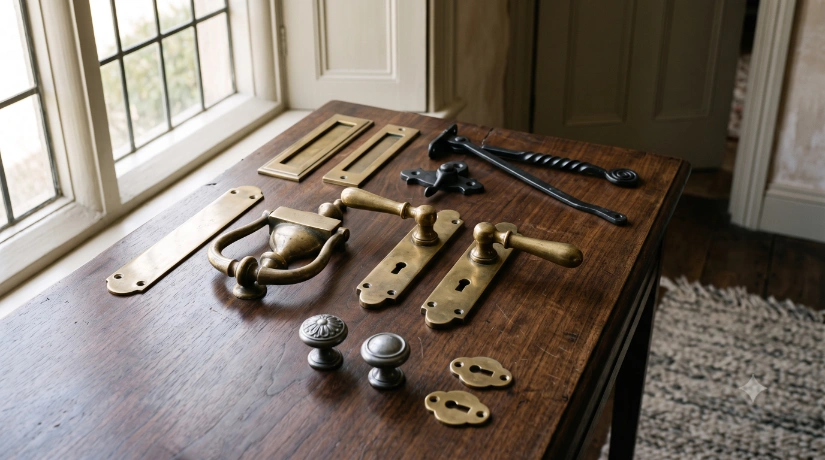
A collection of architectural ironmongery covering door, window and cabinet hardware.
What does "architectural ironmongery" mean?
Architectural ironmongery is the trade term for all the hardware fitted to doors, windows and cabinetry, from handles and locks through to hinges, catches and the many smaller fittings around them. The word "ironmongery" originally referred specifically to iron goods, but it is now used to describe hardware in any material, brass, steel, bronze, aluminium or otherwise.
The word "architectural" distinguishes this hardware from general household ironmongery, such as tools or fixings, by referring specifically to items that are fitted as part of a building's fabric and specified as part of its design.
What does architectural ironmongery cover?
- Door furniture – handles, knobs, knockers, letter plates, bolts and the rest of a door's visible hardware, see our Door Furniture Guide
- Locks and security – mortice locks, cylinders, night latches and multi-point locking systems, see our Locks & Security Guide
- Hinges and door control – the hinges and closers that allow a door to open, close and stay controlled, see our Hinges & Door Control Guide
- Cabinet and furniture hardware – knobs, pulls, catches and fittings for cabinetry rather than doors, see our Cabinet & Furniture Hardware Guide
- Window furniture – casement fasteners, espagnolette handles and sash window fittings, see our Window Furniture Guide
Why the distinction matters when buying
Architectural ironmongery is generally specified as a coordinated package for a building or a specific door, rather than bought item by item, so that finish, style and performance are consistent throughout. This matters particularly for fire doors, where the whole ironmongery package needs to be tested and certified together, and for period properties, where a mismatched finish or style can be very noticeable. See our Hardware Finishes Guide for advice on keeping a scheme consistent.
Who specifies architectural ironmongery?
On larger projects, architectural ironmongery is often specified by an architect, interior designer or specialist ironmongery consultant as part of the building's overall design. For most homeowners and smaller trade projects, it is chosen directly, guided by the practical requirements of each door or window and the desired look.
Related guides
Explore the full Knowledge Centre, or see our Fire Door Ironmongery Explained guide.
Frequently asked questions
Is architectural ironmongery the same as door hardware?
Broadly yes. "Architectural ironmongery" is the wider trade term, covering door, window and cabinet hardware, while "door hardware" is often used more narrowly to refer just to the fittings on a door.
Does architectural ironmongery have to be metal?
No. The term covers hardware in any material, though brass, steel, iron and bronze remain the most common materials used in architectural ironmongery.
Why is ironmongery sometimes specified as a set rather than individual items?
Specifying ironmongery as a coordinated set keeps finish and style consistent across a door or building, and is a requirement for fire door hardware, which needs to be tested and certified as a complete set.
Back to Buying Guides, or explore the full Knowledge Centre.


