

-
Cart
( 0 )
My Basket
0 ITEMS IN YOUR BASKET
Multi-Point Lock Buying Guide
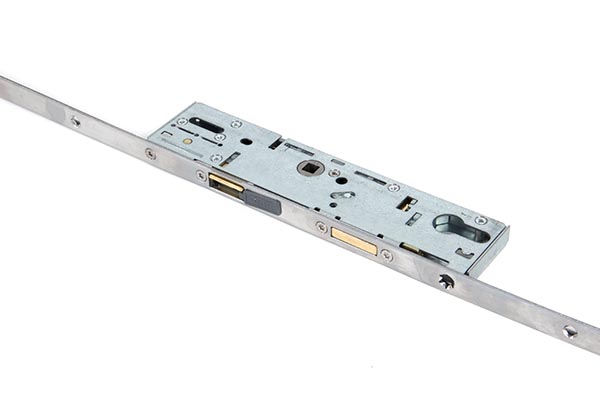
SS 35mm Backset Hook 3 Point Door Lock, from our current range.
Replacing a multi-point lock
Multi-point locks are the standard locking mechanism on modern front and back doors, particularly uPVC and composite doors, locking at several points along the door edge rather than a single point. Replacing one correctly means matching the mechanism precisely, as they are not sold as a one-size-fits-all product.
Measure before you order
- Backset – the distance from the edge of the door to the centre of the spindle or keyhole, commonly 35mm or 45mm on multi-point locks, see our Backset & PZ Sizing Guide
- Case length – the total length of the lock case itself, which must match your existing lock to fit the pre-cut mortice in the door
- Locking points – count the number of locking points on your existing lock, as replacements are generally sold matching the same configuration
- Gearbox position – the centre point of the handle and cylinder, measured from the bottom of the lock case, needs to match your existing setup
Hook locks vs roller locks
A hook lock uses hooked bolts that engage into keeps on the frame, giving strong resistance to being forced, and is commonly used on outward-opening doors. A roller lock uses rollers that engage into a strike plate, and is more common on inward-opening doors. Check which type your existing lock uses before ordering a replacement, as they are not generally interchangeable within the same door preparation.
Handing
Multi-point locks are handed, meaning a lock is specified for a left or right hand hung door depending on which way it opens. Some locks are reversible on site, while others need to be ordered for the correct handing, so check your door's handing and the product details carefully before ordering.
When to call a professional
If your multi-point lock is failing to lock properly, or the door is difficult to close, this is sometimes a sign the door has dropped slightly on its hinges rather than the lock itself being faulty. Adjusting the hinges first can sometimes resolve the issue without needing a full lock replacement, and if you are unsure, a local locksmith or door fitter can diagnose the fault before you order a replacement part.
Related guides
See our Multi-Point Locks guide, or browse our full Locks & Security Guide.
Frequently asked questions
What backset do most multi-point locks use?
35mm and 45mm are the most common backset sizes on multi-point locks. Measuring your existing lock's backset accurately is essential before ordering a replacement.
What is the difference between a hook lock and a roller lock?
A hook lock uses hooked bolts for strong resistance to forcing, typically on outward-opening doors, while a roller lock uses rollers engaging a strike plate, typically on inward-opening doors. They are generally not interchangeable.
My multi-point lock is hard to turn, does it need replacing?
Not necessarily. A door that has dropped slightly on its hinges is a common cause of a stiff multi-point lock. Checking and adjusting the hinges first can sometimes resolve the issue without a lock replacement.
Back to Buying Guides, or explore the full Knowledge Centre.


